
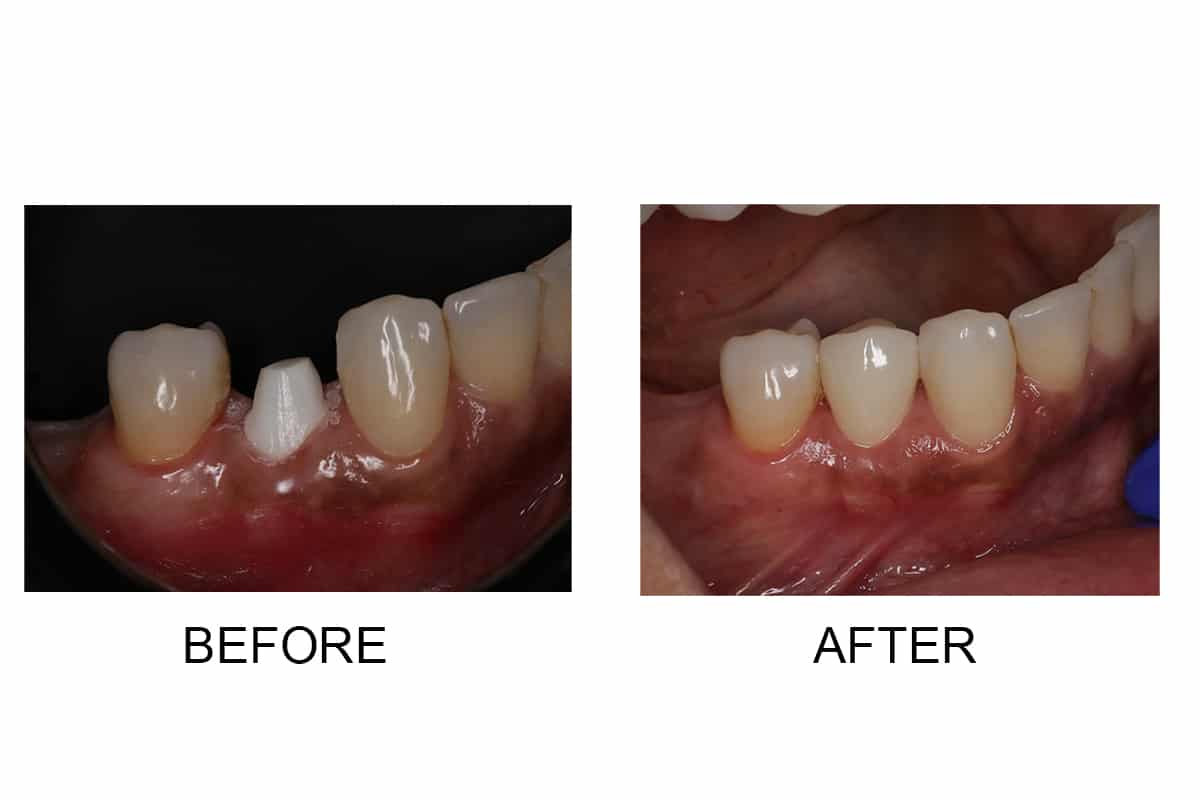
Why metal-free zirconia implants represent a meaningful advance for patients who want to replace missing teeth without compromising their biology.
For decades, titanium has been the default material for dental implants. It works. There is no question about that. Titanium integrates with bone reliably, and millions of successful implants have been placed worldwide. But “works” is not the same as “optimal,” particularly for patients who are taking a thoughtful, biological approach to their health. At BioSmile Health, we offer and routinely place ceramic implants from SDS Swiss Dental Solutions, and this post explains why.
The Problem with Putting Metal in the Body
Titanium is not inert. Over time, titanium implants can corrode and release microscopic metal ions and particles into surrounding tissue. For most patients this goes unnoticed, but for those with metal sensitivities, autoimmune conditions, or a heightened concern about their overall toxic and inflammatory burden, it is a meaningful variable. The body registers the presence of metal, and in some individuals, that registration produces an immune response ranging from subtle chronic inflammation to frank implant failure.
There is also a structural concern. The junction between the implant fixture and the abutment (the two-piece design used in conventional titanium systems) creates a microscopic gap. Bacteria colonize that gap. Over time, this can drive peri-implantitis: inflammation of the tissue and bone surrounding the implant, which is the leading cause of implant failure. Studies suggest that roughly one in five patients with traditional implants develops peri-implantitis. That is not a small number.
Why Ceramic Changes the Equation
Zirconia, the ceramic material used in SDS implants, is chemically inert, electrochemically neutral, and biologically well-tolerated. It does not corrode. It does not release ions into surrounding tissue. The immune system essentially does not register it as foreign, which is precisely the property that makes it valuable in a biological dentistry context.
Beyond biocompatibility, ceramic has surface properties that titanium cannot match. Bacterial plaque simply does not adhere to zirconia the way it does to metal, which means healthier soft tissue, lower rates of inflammation, and a dramatically reduced risk of peri-implantitis. The gum tissue grows onto ceramic differently as well, forming a tighter biological seal around the implant and closing the pathway by which bacteria can travel from the mouth into the bloodstream.
That last point matters more than most patients realize. The connection between oral health and whole-body wellness is well established. A tighter seal around your implant is not just a local benefit. It is a systemic one.
“The mouth registers the presence of metal. For patients committed to reducing their biological burden, a metal-free implant is not a luxury. It is a logical extension of that commitment.”
— Dr. Derrick Johnson, DDS
What the Advantages Look Like in Practice
The clinical case for ceramic over titanium comes down to a handful of advantages that compound over the life of the implant.
Ceramic is 100% metal-free. No corrosion, no ion release, no galvanic currents. Zirconia is biologically and immunologically neutral. The body tolerates it the way it tolerates natural tooth structure. For patients already committed to biocompatible dental care, this is the material that aligns with that philosophy.
The peri-implantitis risk is dramatically lower. Ceramic’s smooth, low-affinity surface resists bacterial colonization, and this is one of the most clinically significant advantages ceramic holds over titanium. Fewer bacteria around the implant means less inflammation, less bone loss, and a better long-term prognosis.
Soft tissue integration is superior. Gum tissue adheres more effectively to zirconia, creating a tighter seal around the implant that limits bacterial entry and supports long-term tissue health.
The aesthetics are natural in a way titanium cannot replicate. Ceramic is white throughout. There is no gray implant body showing through thin gum tissue, no dark margin at the gumline if recession occurs. Just a result that looks and feels completely natural.
And durability is no longer a question. Modern zirconia implants achieve osseointegration (the fusion of implant and bone) as reliably as titanium, with clinical survival rates exceeding 97% over long-term follow-up.
Schedule Your Appointment at BioSmile Health
At BioSmile Health, we take a whole-person approach to dentistry, because what happens in your mouth doesn’t stay there. Whether you’re exploring ceramic implants as a metal-free alternative for replacing missing teeth or ready to take the next step toward better health, Dr. Johnson and our team are here to help.